
The Multiannual Financial Framework as a Driving Force for a Strong Danube Region
Panel discussion
The panel discussion “The Multiannual Financial Framework as a Driving Force for a Strong Danube Region”, held in Brussels on 13 October 2026, brought together European, national and regional representatives to discuss the future of EU funding and cohesion policy for the 2028–2034 period. A key focus was the role of regional authorities in the future Multiannual Financial Framework, the preservation of Interreg’s transnational character, and the need for flexible, accessible funding to strengthen cross-border cooperation, particularly with Ukraine. The discussion highlighted the importance of aligning the EU Strategy for the Danube Region (EUSDR) with future funding instruments to support resilience, regional development and European integration. The event was organised by ARGE Donauländer and hosted by the Lower Austrian Liaison Office in Brussels.
Welcome remarks
In his opening speech, Vadym Shkarivskyi, chairman of the ARGE Donauländer/ Deputy Chairman of the Odesa Regional Council, emphasized that the future EU Multiannual Financial Framework (MFF) must serve as a flexible and strategic driving force for the Danube Region, prioritizing resilience, crisis responsiveness, and the simplification of administrative barriers to support cross-border cooperation with Ukraine. By highlighting the Odesa Region’s role as a vital logistics and agricultural hub, the speech called for the new financial architecture to empower regional authorities as active drivers of European integration rather than passive implementers.
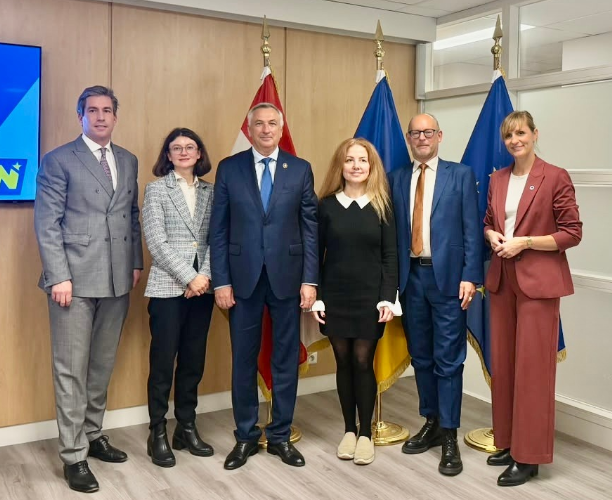

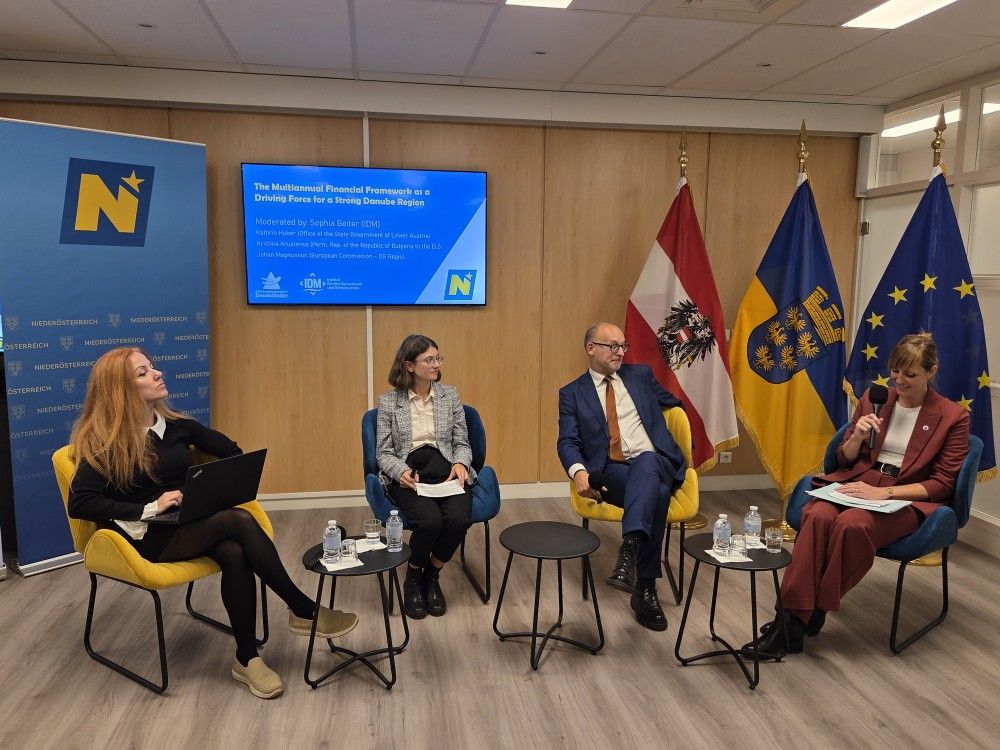
Plenary discussion
The plenary discussion was moderated by Sophia Beiter/ Institute for the Danube Region and Central Europe (IDM) and served to gather a wider range of perspectives. Johan Magnusson/ European Commission – DG REGIO, Kristina Krusteva/ Perm. Rep. of the Republic of Bulgaria to the EU, and Kathrin Huber/ Office of the State Government of Lower Austria – Department for International and European Affairs contributed to the discussion as panellists. The lively and also quite controversial discussion focused on how the MFF and the new „National and Regional Partnership Plan“ (NRPP) architecture will shape the future of cohesion policy and of Interreg, specifically regarding the autonomy of regional partners and the preservation of its transnational character with non-EU countries. The regional representatives were calling for their central role as implementing partners in EU cohesion policy and Interreg to be maintained, for ensuring tailored, effective regional development. They urged the European Commission to clarify governance and audit rules to avoid bureaucratic complexity while securing stable funding for cross-border cooperation. Furthermore, the dialogue examined the strategic alignment between the EU Strategy for the Danube Region (EUSDR) and Interreg funding to ensure effective project implementation, with a particular emphasis on Ukraine’s integration and Lower Austria’s priorities for the 2028–2034 period.

Working Community of the Danube Regions
The Working Community of the Danube Regions (ARGE Donauländer) is a cooperation platform established in 1989 at the initiative of the Province of Lower Austria. It serves as a representative body for the regions, a driving force behind the EU Strategy for the Danube Region (EUSDR), a think tank for Danube Region activities, and a network connecting stakeholders across the Danube Region.